

IVI and related projects
IVI-Related Projects
IVI, invented by Tsinghua University, is technique officially recognized by the Internet Engineering Task Force (IETF). It is a stateless IPv4/IPv6 translation technology developed by the China Education and Research Network (CERNET/CERNET2). The technology facilitates interconnection between IPv4 and IPv6 networks so that it is capable of (1) deploying a pure IPv6 server and providing services to users of the IPv4 internet through the IVI translator, (2) deploying pure IPv6 access network and accessing the IPv4 internet through the IVI translator, and (3) providing high-performance network connections across domains, countries, and continents for high-performance computing centers through the dual stateless translation technology and IPv6 traffic scheduling.
Introduction to the IVI Technology
The Internet is the most important information infrastructure in modern society. Its core technology is the Internet Protocol (IP), but the addresses of the widely-used IP version 4 (IPv4) has been already allocated. IP version 6 (IPv6), with its huge address space, has become the inevitable replacement for IPv4. IPv6 also has key support for the development of emerging applications such as mobile Internet, cloud computing, and the Internet of Things. However, IPv6 is not compatible with the IPv4 so the transition to IPv6 is going to become a global technical problem. Based on research and deployment of the dual stack and tunnel technology, recommended by Internet Engineering Task Force (IETF), and related project support from the Ministry, breakthroughs have been achieved in the key areas of IPv4 and IPv6 interoperability, IPv4 address multiplexing, compatible IPv4 applications, supporting emerging applications, network manageability, fusion of mainstream IPv6 transition technologies, supporting incremental deployment, smooth evolution to pure IPv6, achieving IPv6 fusion transition technology based on stateless translation, and the first large-scale use of stateless translation technology on the global Internet.
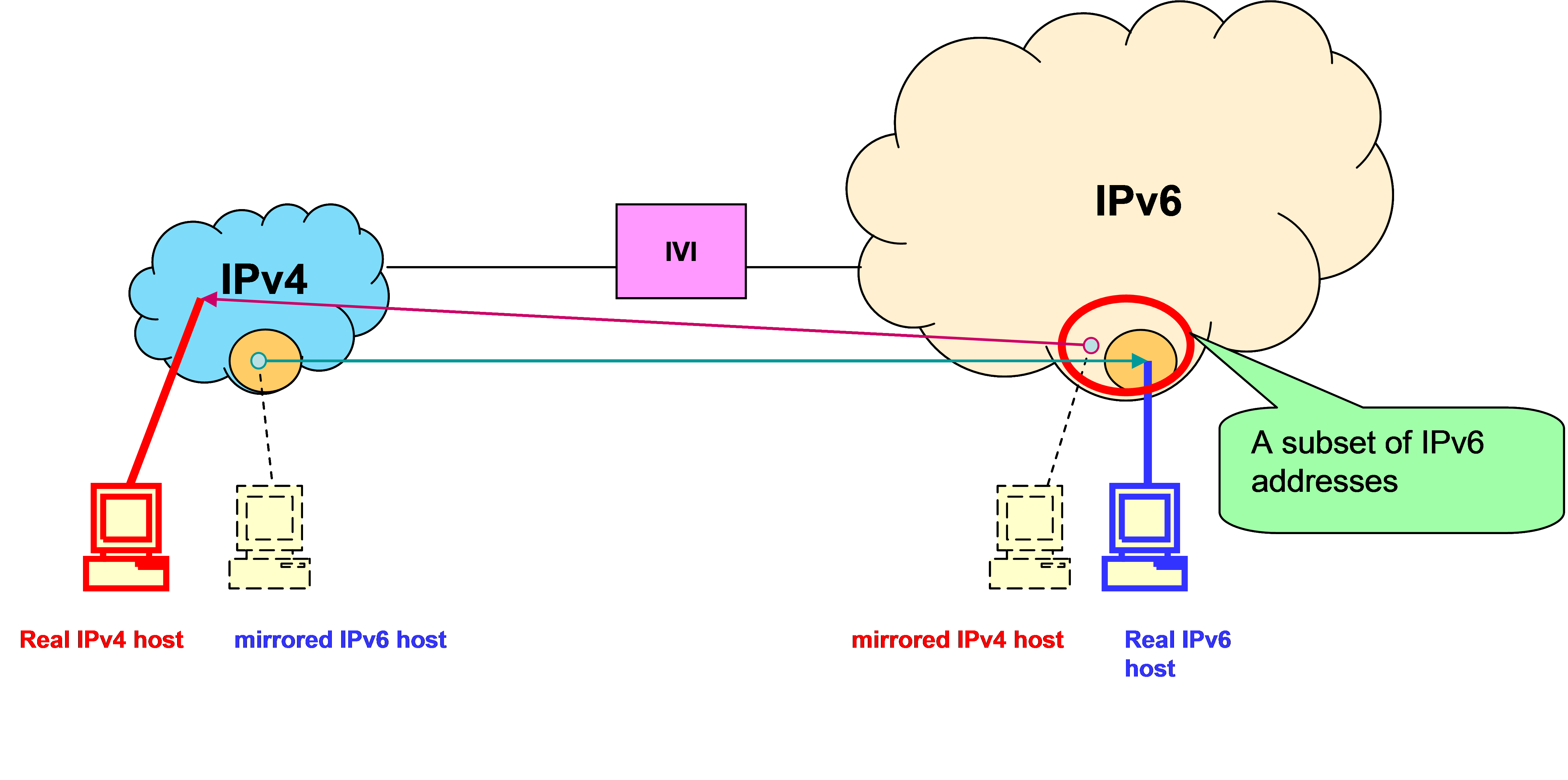
Technical Points of IVI:
1. Stateless address mapping algorithm and IVI protocol interworking algorithm between IPv4 and IPv6. The global routable prefix was used to construct a translatable address, which solves the mapping problem of IPv4/IPv6 from different address spaces. A new fragmentation algorithm was proposed to realize the interworking between IPv4 and IPv6 in different grammars, semantics, and timing. The tracing algorithm of ICMP was proposed to enhance the manageability and security of the network.
2. Port coding algorithm and extending algorithm in the transport layer. The port mode can be adjusted on demand to achieve efficient multiplexing of IPv4 address based on security and flexibility. A dual stateless translation mechanism was proposed to solve the problems of the IPv6 transition system in supporting multiple scenarios, multiple-operation systems, and multiple applications.
3. IPv6 fusion transition mechanism based on stateless translation technology. The address format of dual translation and encapsulation technology was unified to implement the method of auto-switch dual stateless translation/stateless encapsulation, dual stateful translation/partial state encapsulation/stateful encapsulation, etc. This can also be flexibly applied to different IPv6 transition scenarios and different transition phases such as initial/intermediate/final phases.
IVI technology has provided 9 international standards for IETF RFC, which have been referenced by 142 other RFCs. These standards have been used in various products such as world-renowned OEMs such as Huawei, ZTE, Cisco, and Juniper. China Education and Research Network (CERNET/CERNET2), along with hundreds of college campus networks, have deployed and operated this technology for more than 10 years. China Telecom, Gansu Broadcasting Grid, and Henan Education Network have carried out scale tests. Many foreign network operators, such as Verizon, Charter, Rogers Wireless Canada, Reliance Industries (India), and Italian Telecom, have also conducted scale tests and trials. Based on this technology, Sohu established the first IPv6 Olympics official website at the Beijing Olympics and Shengke developed the first IPv6 translation transition chip. This technology has supported many major companies such as Apple supporting pure IPv6 access in iOS 9.5 and above, Google integrating this technology into Android versions 4.3 and above, and US mobile operators such as T-mobile and MetroPCS providing mobile networks with pure IPv6.
The IVI translators are distributed between the first-generation education network (CERNET) and the second-generation education network (CERNET2), and the translation traffic exceeds 50 Gbps.
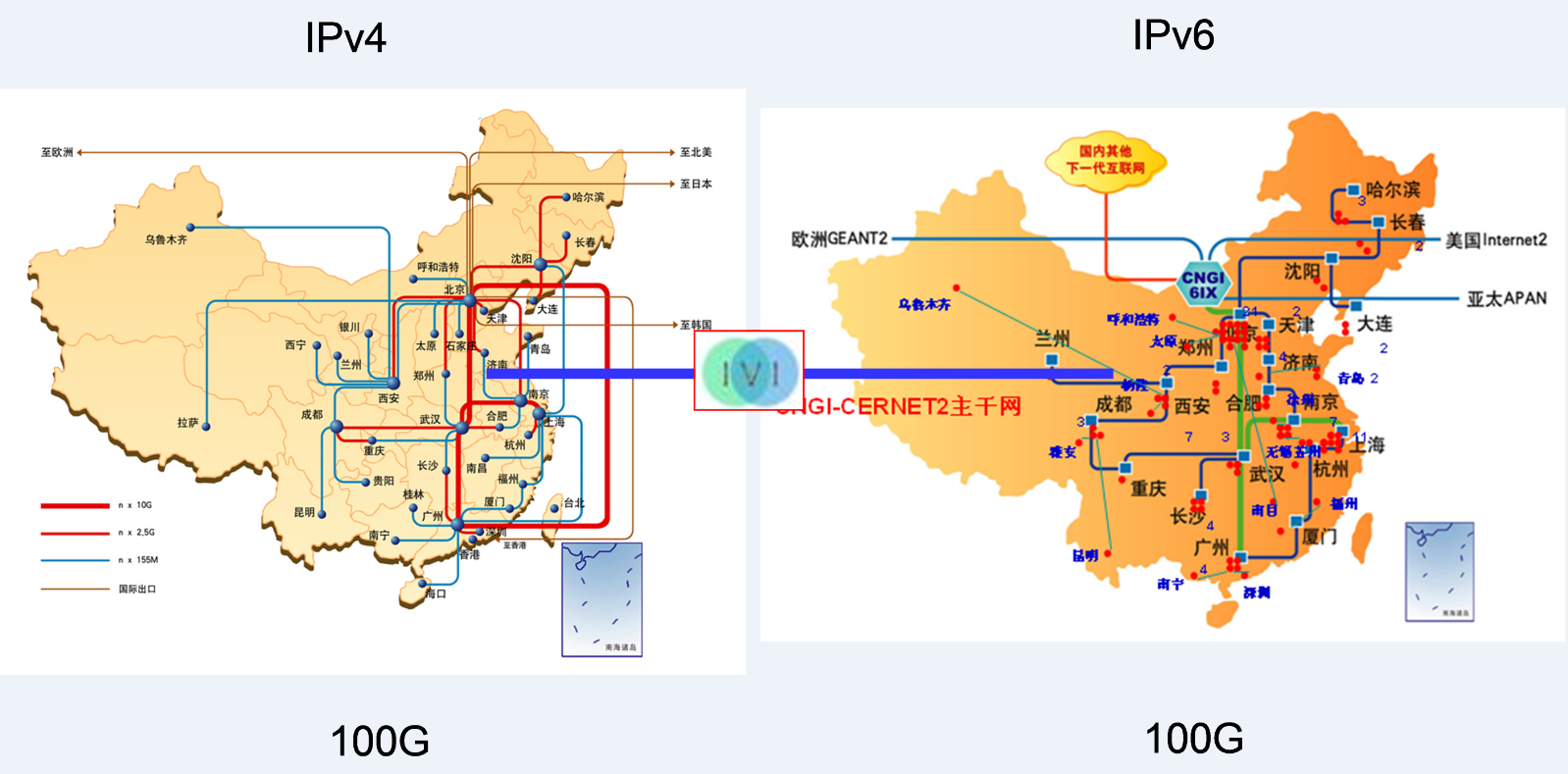
The Application of IVI Technology
The realization of interworking between IPv4 and IPv6 with the IVI technology has many applicable scenarios of use. For example:
(1) The application of IVI technology in pure IPv6 servers
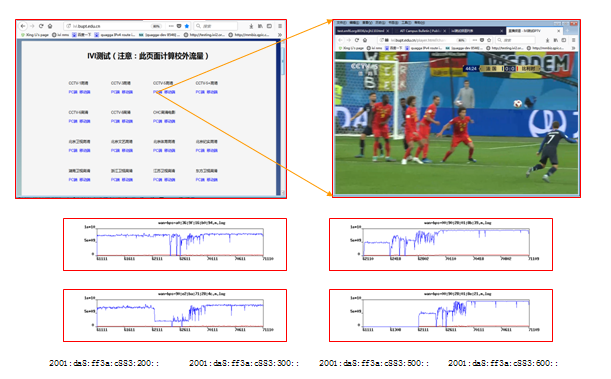
Pure IPv6 servers were deployed on the pure IPv6 backbone CERNET2. These servers used IPv4 translatable addresses, so they can serve IPv4 users through stateless IVI translators. For example, http://ivi.bupt.edu.cn has been operating smoothly for 10 years, as shown in the following figure.
(2) The application of IVI technology in pure IPv6 user networks
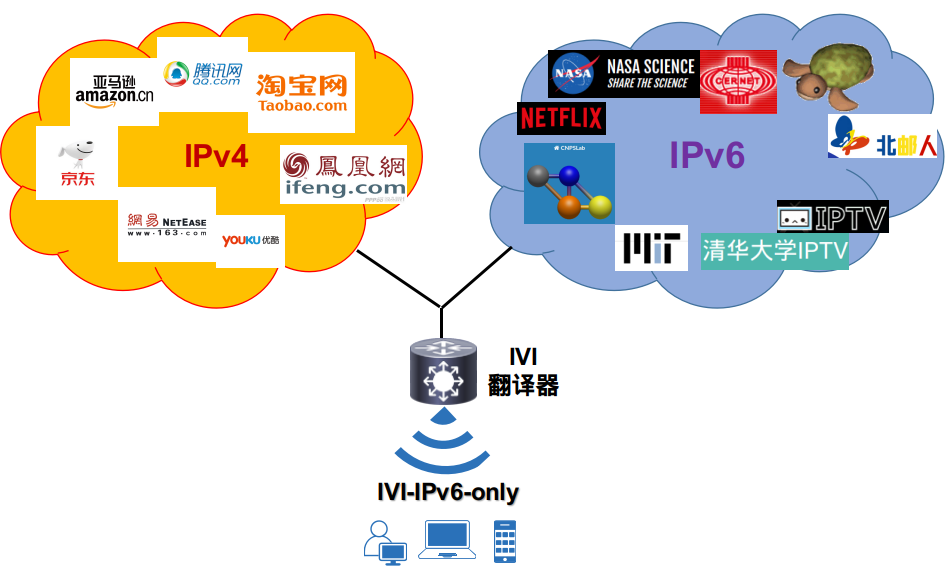
Modern operating systems have integrated IPv4/IPv6 translation technology, so computers on pure IPv6 subnets can access the IPv4 Internet through the IVI translators. This includes various IPv6 applications that are embedded with IPv4 addresses. Some operating systems, which support any of its applications to access IPv4/IPv6, include Mac OS (10.13 and above), iOS (9.2 and above), Android (7.0 and above, original Android 6.0 and above), and the other operating systems seen below in the diagram.
(3) High-performance private network with IVI technology
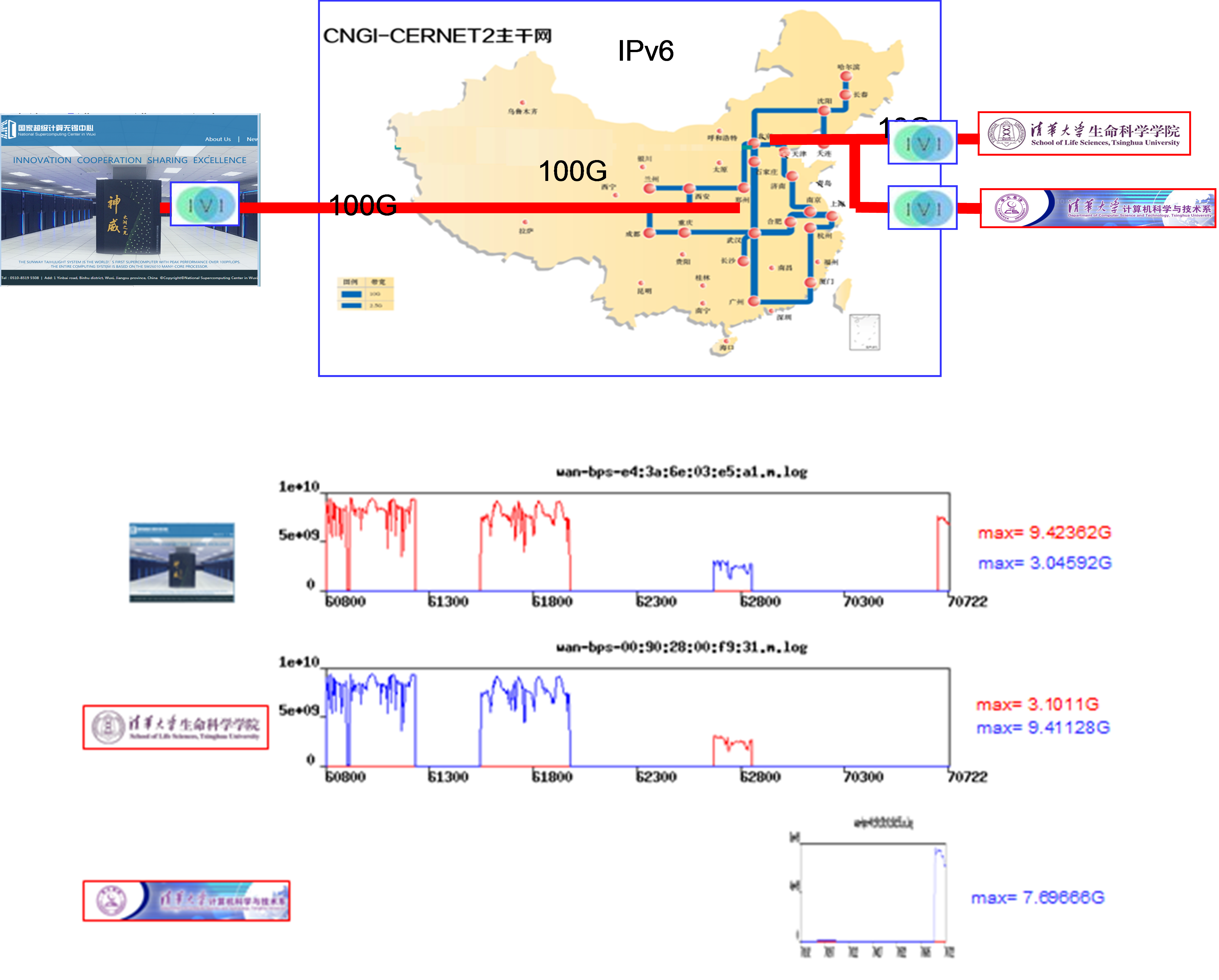
The stateless IPv4/IPv6 translation technology IVI can also be used in cascade, called dIVI, and can utilize the common IPv6 routing technology to build an IPv4 private network. For example, located in Wuxi City, Jiangsu Province, China is one of the world's fastest supercomputer systems, the "Taihu Light", that is networked with CERNET2 via a 100G channel and has set up multiple 10Gbps IVI translators. If users living in other cities want to use this computer, they can use the dIVI technology to transmit data at high speed through the CERNET2 IPv6 backbone network. The TCP rate per stream from Beijing to Wuxi can reach more than 8Gbps, as shown in the following figure.
International Exchange
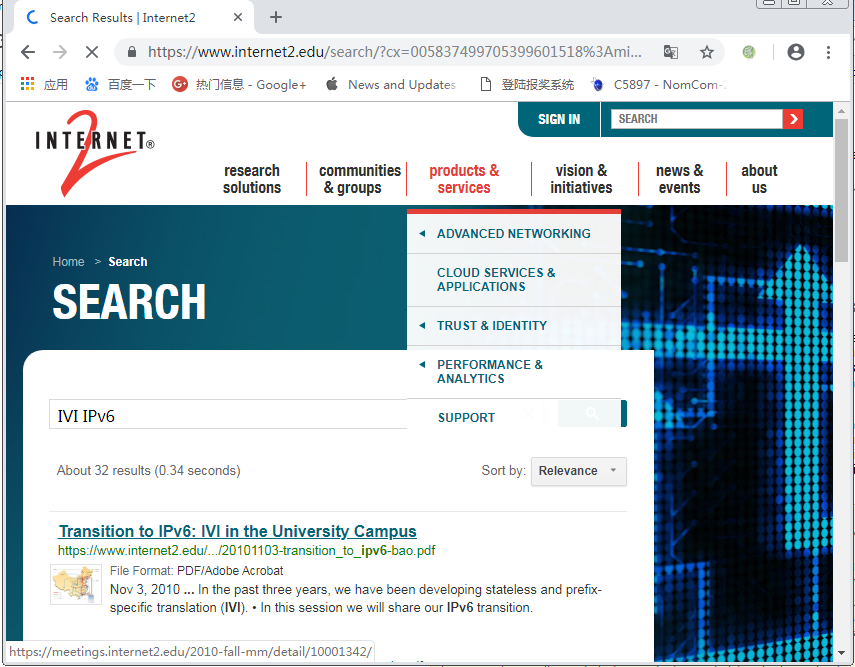
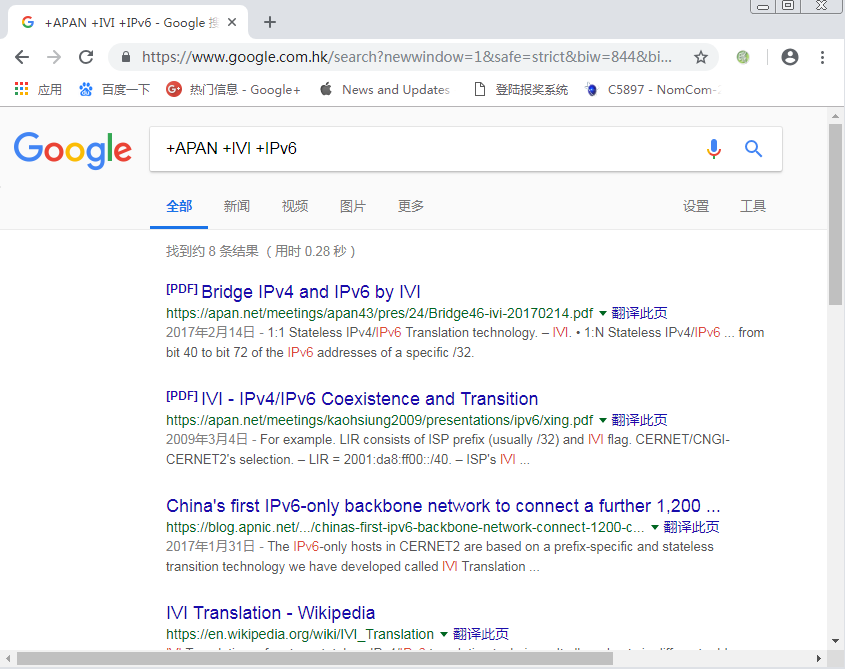
Multiple exchanges themed on the IVI technology have been organized in numerous international academic conferences such as TEIN/Asi@connects, APAN and Internet2.
Summary
Since IPv6 has been implemented on the global academic network, IVI technology has facilitated the application of new tools in addition to BGP routing, tunneling, MPLS, SDN, etc., which support networking services that are manageable, secure, high-quality, and have large transmission rate for cross-continental academic networks.
References
1. https://en.wikipedia.org/wiki/IVI_Translation
2. https://en.wikipedia.org/wiki/DIVI_Translation
3. https://en.wikipedia.org/wiki/Mapping_of_Address_and_Port
(By: Xing Li)
(release date:2018-12-05)
